Tuesday, January 27, 2009

Know Your Options When It Comes To Discount Home Improvement


There are always good money to be saves with a discount home improvement. Such discount enables you to build the asset value up in your home, but at only a fraction of the cost. The main discount home improvement store I would like to highlight here is the Habitat for Humanity discount home improvement store. We all know quite well the benefits of Habitat for Humanity. They help low income people to be able to have better homes, and this is an improvement for the quality of living for those in the low-income bracket.

Discount Home Improvement - More Information on the Habitat for Humanity Discount Home Improvement Center

We are currently in a home improvement boom stage right now. The Habitat for Humanity discount home improvement center hopes this will boost the nonprofit’s ability to improve their organization. This store and many others sell discounted home items to those who are looking for do discount home improvement options for their homes.

Discount home improvement is a great way to enhance your rental estate. If you can have them with discount prices, you are putting a minimal amount of an investment into the building and getting higher investment out of the estate. This is why the real estate business is booming. Buying the property, renting it and fixing it, ends up giving you the perfect opportunity to take equity out of the home itself.

Finding good discount home improvement centers like the Habitat for Humanity can easily be done via the online internet. When browsing the internet, you can find many discount home improvement websites out there. Make sure you do your research to get the best home discount prices. Some websites will say they are discount home improvement websites, but end up not being much of a discount in the end.

Purchasing fixtures and faucets, etc. can all enhance the value of your home, as the quality of your home can make you feel good while you live in it. If you are tight on cash flow, looking for discount home improvement centers is the way to go to save yourself some money. Besides, after you shop at your discount home improvement center, you can go out and buy yourself a big meal! I’d rather buy a steak than spend more money on the drywall.

Make sure you order your products correctly before you initially plan to start the project. It may take some time for everything to be processed and shipped out to you, unless you are lucky enough to have a discount store near where you stay. If you want your items to be there on time, then you have to make sure you factor this into your plan. Otherwise, have fun shopping and getting all your home improvement items at a discounted rate! Oh yes, and that steak too!

Small Bathroom Lighting


Small bathrooms might be those added under a stairway or in a spare closet. They might be for children, adults, or both. A small bathroom might be a guest powder room off the foyer or living room. One thing they have in common is that they are – small. Another thing they have in common is that they call for special lighting.

Small bathroom lighting is dependent, in part, on the use of the bathroom. One type of bathroom light fixture might convey a warm, cozy feeling for dinner guests. Another type of bathroom light fixture might make the small bathroom seem spacious – or provide light for reading while relaxing in a deep soak tub.

Warm and Cozy Lighting

You can make a small bathroom feel warm and cozy rather than claustrophobic by adding the right light fixtures. Suppose this is a small half-bath meant primarily for guests to "freshen up" before dinner. You've used small-patterned deep red and gold wallpaper for warmth. What kind of light fixtures should this small bathroom have?

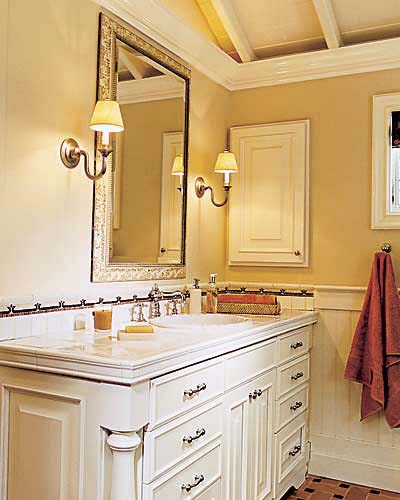
Try recessed, can ceiling light fixtures focused on work areas. Or use indirect lighting around the perimeter of the ceiling-wall junction. On either side of the mirror above the sink, add a wall sconce light fixture. Avoid large wall sconces, or those that protrude too far from the wall, as they will make the room look cluttered. Layering these two types of light fixture will give you warm, gracious lighting in a small bathroom for guests.

Bright Enough for Reading

If the small bathroom in your home has a soaking tub, or one used by children, you will want good lighting in the tub area. Most lighting above tubs and showers is diffuse lighting, which is fine for a quick shower or bath. Diffuse lighting is also good over-all lighting to soften the entire bathroom. However, if you want to read – or get paint off of a child – you may want brighter, more concentrated lighting. Use a focused flood or halogen light fixture on the wall above the tub.

Choose safe, moisture proof light fixtures for this area. "Make sure that your lamps are UL rated for damp locations insuring safety," says Todd Phillips, president of lighting manufacturer Quoizel.

Space Enlarging Lighting

You can never have too much light in a small bathroom, as long as you use it properly. Perhaps the best idea for small bathrooms is to begin with indirect lighting around the ceiling for overall softness and warmness. Then consider these possibilities.

1. If your small bathroom has a window, use light-admitting, sheer curtains at the window. Add a shade that can be drawn for privacy.

2. Light shower or tub with separate wet area light fixtures, strong enough to permit easy personal grooming, but with dimmer switches for atmosphere.

3. On either side of the vanity mirror, use warm fluorescent vertical wall sconces to provide even facial illumination. Place a halogen light above the mirror for cross illumination. Place these mirror surrounding light fixtures on a separate switch.

4. Run a linear light fixture along the vanity toe-space to provide a soft night light.

5. For a family use small bathroom, place a halogen or flood light near the toilet, focused as a good reading light. Install a separate switch.

With all of these light fixtures layered in a small bathroom, you will always have exactly the amount of light you need for any given task. Yet you can make it cozy with dimmer switches, safe with night lights.

Helpful Tip

Small bathroom lighting need not be garish or insufficient. You can have plenty of light or cozy lighting if you layer your light, and control it with separate and/or dimmer switches.

Decorating Ideas for Small Rooms


* Make the most of decorating small rooms. Color plays a vital role in a small room. It sets the decorative style and scheme, but also can change the room's appearance. Use bright colors on the walls. Darker colors may be more popular but using bright colors makes a room seem more spacious. For example: Cool colors such as blues, greens, (some) purples make a small room appear larger and airier. The reverse is true of warm colors such as reds and yellows as they will make a small room seem more intimate and intense.

* A home decorating tip for integrating color into mostly white rooms—blend, blend, and blend! There are many shades of white and cream that work nicely with "graduations" of accent colors. Visualize three shades of rosy pink pillows against a white sofa!

* Decorating ideas include painting the ceiling a lighter color than the walls. Use smaller patterns in wallpaper and furniture upholstery. Large patterns may be used in accessories such as pillows and throws.

* Select fewer, larger pieces of furniture to make a room appear more open and less cluttered opposed to putting lots of small pieces of furniture in the room. Taller furniture should be placed along a far wall while shorter furniture may be placed away from the wall giving a sense of spaciousness.

* The use of screens will help divide multi-purpose rooms in a small house or apartment. A bedroom or living room may have one corner as an office. A screen will provide privacy as well as hiding the “trappings” of the work area.

* Daybeds with a pullout trundle are the answer for small bedrooms. They will accommodate two people but take up less space in the room on a daily basis. The room can also be used as an office, craft room or quiet sitting room.

* Use textures for interest in a small room. Combining textures in your decor will give a small room interest, appeal, dimension and depth. Choose accessories and fabrics with texture for the best impact; for example: wrought iron, glass, stone, metal, chrome, copper, bronze, mirrors, detailed finishes, textured fabrics, shiny fabrics, and unique area rugs to mention a few.

* Mirrors are a great way to create an illusion of space. If you have a wall in front of the entrance as you enter your home, hang a unique mirror on that wall to open it up and add interest to the area.

*Quick change artist! Move furniture and furnishings around! Don't be afraid to rearrange items in your home. Just changing the accessories or pictures from room to room can bring about a huge change.

Furnish Your Home on a Budget


Let’s face it – you need furniture. Sure, you can cut corners by going Japanese and using your coffee table as the dining table, or by transforming your living room into a Middle Eastern pillow lounge. But in the end, you’ll need at least a few basic pieces of furniture, even for the most spartan of living conditions. Don’t worry – saving money on your furniture is easy and doesn't mean sacrificing the quality of the product. Just follow some of these easy guidelines.

Look for furniture on sale

This might seem a little obvious, but if you really put the effort into sniffing out the best sales, you could save a bundle on furniture. More often than not, the best deals on furniture come every January and July. And if you’re looking for outdoor furniture, August is best.

Also check back at the end of every month. The majority of the furniture companies function on monthly basis – computing their sales, releasing their promotions and introducing new furniture. There may be certain items that won't be offered the following month, so these lines of products may be offered at a very low price. And since most of the furniture companies pay sales people on commission, they’ll be a little more desperate to make the sale when the month is running out.

Apply for the credit card being offered by the furniture shop

This is a tricky one. You can get a great deal on your furniture purchase with the retailer’s in-store credit cards. Depending on the store and the sale, you may be able to reduce or eliminate your interest payments and sales tax, or you may be offered a special discount available only to cardholders. All you have to do is apply for this credit card and you can get discounts on anything you want.

But be careful when using this strategy. The temptation is to spend beyond your means just because you have the available credit. Read the fine print of the terms and conditions carefully. If you’re confident you can pay off your bill in the allotted time, then you’ll be fine. If not, be careful – interest rates after your introductory period may jump as high as $25%!

Search online

If you’ve seen a certain piece of furniture you like in a store near you or in your favorite magazine, check the internet for a better price. Get as much information about the manufacturer and the piece name and Google it – you may be able to find some deep discounts. But don’t forget to check the shipping rates and taxes that may be applied to your purchase or you might not be saving as much as you think.

Buy used furniture

Buying second-hand is great because it saves you money and reuses materials that might otherwise wind up in the landfill. Check your telephone book for local thrift shops, reuse centers or charity shops. Be creative! If you find a nice sturdy couch you love, but the fabric’s worn thin, you can have it reupholstered or covered in new slipcovers.

If you live near a college town (especially a wealthy college town), you’re in luck. Watch the thrift stores extra closely each spring around move-out time – you’ll be amazed at the things students will leave behind. Better yet, if you know someone who will be moving soon, offer to take that old piece of furniture off their hands. They may be so excited not to have to deal with moving it themselves that you’ll get a great price, or even a free piece of furniture. Before you know it, you’ll be on your way to your very own, fully furnished home.

Redecorating Your Apartment? Do It Up Perfectly On The First Try


Redesigning the interior décor of a family home is such a great and rewarding adventure. However, it can also be aggravating if you are working on a limited budget and don’t plan every last detail. Of course, no one can tell you what decorating style will work best in your home – only you know that with certainty. What we can say with certainty is that there are several surefire tips that will help you make the most of your interior design budget, and get it right the first time around.

De-clutter Your Home – Clutter means mess and no place can be peaceful and restful with chaos everywhere. Before you start your interior design project, de-clutter your home. It allows you to start with a clean slate. It also means you have a good idea of what you what you need to purchase for your new design scheme; what you want to keep and what you need to get rid of. It is a very educational task!

Learn to Thrift Shop – Whether it is yard sales or church bazaars; a second hand store or a local retailer – sales and discounts are everywhere if you just keep your eyes open and your pocketbook closes! Home décor planning does not mean that everything you buy has to be new.

Don’t Forget ‘Cozy’ – It goes without saying, we all want the home that is on the cover of this month’s home and garden magazine but will it work for your family? More times than not, the answer is no. The expertly staged rooms you see on the glossy pages of magazines are beautiful to look at but in the real world, not comfortable and homey. Yes, it is necessary to inject a sense of style to your interior design, but more importantly you want comfort and coziness.

Give Eclectic a Try – It doesn’t always have to match and very often a space that is too perfectly matched falls way short on originality and character. Don’t be afraid to mix and match patterns. For example, plaids, florals and stripes actually go really well together if you keep the color palette and style in check. Add an upholstered ottoman in a different color or create a focal wall that is filled with your favorite art.

Don’t Be Afraid of Color – A bold color on one wall or on a piece of well placed furniture can give a room a whole new look and feel. Don’t be afraid to experiment with color – after all, if you hate it, just repaint it! Spaces that are painted all white are austere, cold and boring. Color can also be used in your furniture fabric, throw rugs, toss cushions and drapery panels. Use your imagination and make color your friend – your home and your family will praise you for it.

Get Rid of the 50” Television Eyesore – The big black box of death when it comes to interior design – there is no quicker way to spoil the look and feel of a room than to set a huge projection TV down in the corner of the room. If you must have a large screen TV, replace it with plasma or LCD TV that can be inconspicuously and elegantly placed on a wall.

Don’t Forget About Your Family – Of course you are redecorating for you but don’t forget about the other occupants in the house! If you have kids aged 5 or younger, a white sofa hardly seems practical no matter how fantastic you think it will look. If you have older teens in your house, look for fabrics such as rayon and chenille that are stain resistant and durable. If you have animals, look for hard wood or laminate floors instead of carpet that will collect and trap your pet’s hair and dander.

Monday, January 26, 2009

How To Create An Indoor Herb Garden


The use of fresh herbs for cooking is becoming more popular now than it has been for along time. Our forbears knew both the medicinal and culinary powers of herbs but it is only recently that fresh herbs have regained their popularity with home chefs. That combined with the fact that many of us are now apartment dwellers with no gardens mean that an indoor herb garden can be both decorative and useful.

Herbs will grow better in a pot rather than a box and glazed pots are better than clay as the soil will not dry out so quickly. For the same reason a plastic pot can be just as effective but whether glazed or plastic there is one point to be careful of when using non-porous pots. On no account should you over water your herbs because they could become waterlogged and subsequently rot.

One option is to have an attractive container, which will hold a number of 5 inch porous pots. I have even seen someone make a herb garden using pots placed in a large antique fish steamer.

If you go to your local garden center they should be able to advise you on the best soil mix for your herbs. These days it is easier to use a commercial preparation rather than earth as you can be sure that it will be disease free.

When it comes to potting your herbs drainage is important. If you are using non porous containers place a few pieces of broken china or brick to aid the drainage.

Partly fill you pot with your potting mixture, make a hole for the herbs root and gently place it in the pot. Then you can pack more of the mixture around the herb and top up to about 1/2inch from the top of the pot. Sprinkle some water on the pot and keep it in the shade until the herbs begin to appear.

So what type of herbs should you grow in your indoor herb garden? It really is down to personal taste but some of the ones I would consider growing are Chives, Lemon balm, Mint, Rosemary, Sage, Tarragon and Thyme.

Once your herbs start appearing they only need light and water. Providing it is not in direct sun light a window shelf could be an ideal place for your herb garden or failing that anywhere that it is reasonably light. Herbs do not need a lot of watering and once a week should be adequate for most condition. If the soil feels dry then it is time to water. At other times you can use one of those water spray cans just to give the leaves a wetting if you wish.

An indoor herb garden can be both decorative and functional. They also have the added advantage that many herbs give off a delightful aroma so there will be no need for potpourri or air fresheners.

Saturday, January 24, 2009

Getting Your House Organized


In this modern world, when distant populations are connected by computers and modern communications, when we are all aware of so many possibilities, we seem to have less time and space to enjoy the abundance around us. Today it is common for both spouses work outside the home. Everyone comes home exhausted from work at the end of the day, needing to tend to children and pets, to produce a nourishing meal for the family, to exercise for the allotted time, and to maintain a marital relationship. The last thing you want to do is get your house organized, but it may be the clutter in your house that is slowing you down and helping to make you feel tired.

IF you spend significant amounts of time looking for items that have been “put in a safe place,” if you struggle to clean your house because of the clutter, if you avoid having friends over because of the mess, if you would be embarrassed for your employer to drop by your home unannounced, you are in danger of letting the clutter take over your life. It is time to take on the task of getting your house organized. When you are finished, you will discover that you have much more free time at the end of the day. Basic tasks are simplified when you know where all the tools are. Everyone is happier when homework and bills aren’t misplaced in piles of clutter. And it is amazing how quickly a house can be cleaned when it is only necessary to clean the house, instead of having to pick up the mess in the house and then clean it.

If the task seems overwhelming, if you can’t think about organizing the entire house at once, take heart and start small. Begin with an area that will make a true impact on your life from the beginning—your clothes closet. If your closet is cleared out and arranged efficiently, you will be able to spend less time finding clothes to wear when you are getting ready for work in the mornings. Because your wardrobe will be organized, you will be able to dress more quickly and attractively. And when you shut that closet door in the morning, you will know that there is a small part of your house that is neat and clean. Just knowing you have made a start will give you the motivation to clear another section, until you have finished organizing the entire house.

Spend an hour in your nearest hardware store to get some cluttered closet help. There, you will find lots of ideas for how to organize, along with supplies for adding an extra shelf or closet rod if necessary. Also, pick up some paint. One of the first things you will need to do for this project is to empty the closet of everything. This is an excellent time to wash the walls, repair or replace fixtures and shelves, and repaint.

Another source of cluttered closet help is a book on how to sort through and organize your wardrobe. All your clothes should be in view. Make a pile of clothing that you haven’t worn in two or more years. These items may not fit, they may need mended, or dry-cleaned they may be out of style, or they may be worn out. If it is an item that you would wear if it were fixed, and that goes with other items you are keeping, put it in a pile for repairs. Otherwise, give it away. If your closet is small, consider storing off-season clothing in another closet or storage container. Keep your fresh, new closet for the clothing you actually will wear now.

At this point, you may sort in any way you want—by color, by type of clothing (i.e., pants, blouses, and jackets), or by style (i.e., professional, casual, or dressy). This is a good time to utilize some of the many new closet organizers available now. You may want to invest in hangers for belts and scarves, special pants hangers or suit hangers. If space really is at a premium, consider an over-the-door hanger or a hanger that can handle multiple items. There are closet organizers for every article of clothing.

When you are finished, immediately discard the pile to be given away, take the pile to the cleaners, and sit down to mend what is left. Congratulate yourself on a job well-done! You have taken the first step on the way to getting your house organized.